Unless otherwise stated, this website is not related or associated with any third-party brand. Brands, trademarks, logos, and company names are merely used as examples.
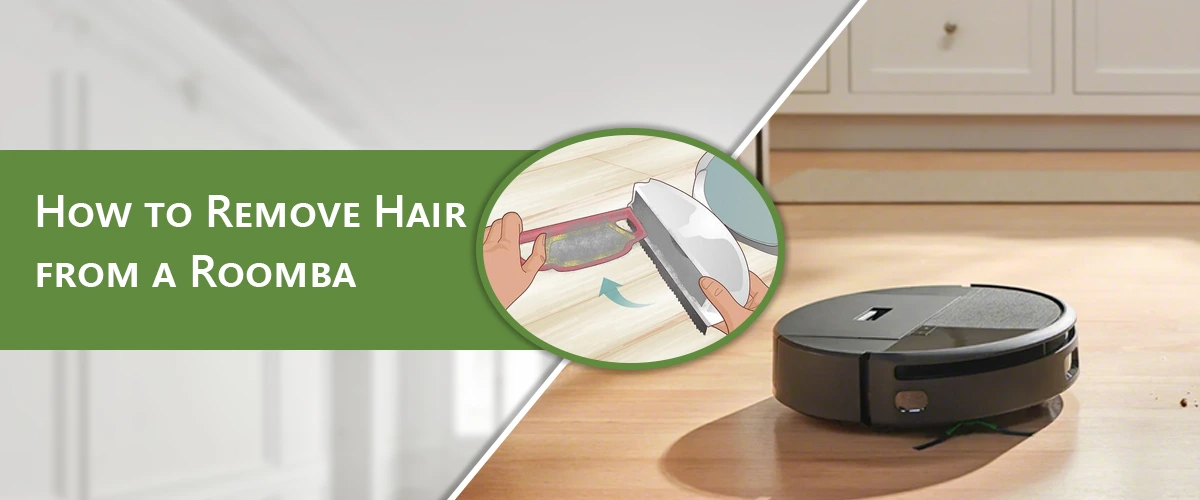
How to Remove Hair from a Roomba?
You are aware of the Roomba’s life-saving potential if you possess one. Your floors are constantly being vacuumed by this little robot, which collects hair, dust, and crumbs. However, tangled hair is one of the most frequent maintenance problems that Roomba users deal with. These tangles, which might be pet hair, long human hair, or lint, frequently get up around the wheels, brushes, and rollers. If left unchecked, they may cause your Roomba to stop functioning correctly, slow down, or create odd noises. To maintain your Roomba functioning properly, you must understand how to Remove Hair from Roomba.
We’ll go over how to clean your Roomba step-by-step in this article, paying particular attention to the wheels, brushes, and rollers. You’ll know accurately how to keep your robot vacuum operating like new by the end.
Why Your Roomba Gets Hair Stuck
One of the most difficult materials for a vacuum to handle is hair. Hair is long, pliable, and prone to tangling, in contrast to dust or crumbs. Hair strands naturally wind around the rotating Roomba’s brushes. This accumulation eventually travels to the front caster and wheels, where it may impede motion.
- Pet owners are familiar with this issue: dogs and cats continually shed hair, which clogs the machine if it isn’t cleaned. Long human hair has the same impact, even if you are pet-free.
Understanding how to get rid of hair from a Roomba should thus be a part of your everyday cleaning regimen.
Equipment You’ll Need
Hair removal doesn’t require expensive equipment. You can usually get by with a few essentials:
- A seam ripper or scissors (to take away knotted threads)
- A little screwdriver (in case the front caster or side wheels need to be removed)
- A brush for cleaning (Roombas frequently include one in the box)
- A paper towel or a dry cloth.
Methods for Cleaning Roomba Brushes of Hair
- Flip your Roomba over and turn it off. Prioritize safety by turning off your robot before cleaning.
- Find the brush container. You might have to open a cover or push locks, depending on your model.
- Take out the brushes. Typically, Roombas have two primary brushes that are simple to remove.
- Untangle your hair. Carefully cut through the hair that has been coiled around the bristles using scissors or a seam ripper.
- Make sure the brush ends are clean. Frequently, hair becomes lodged in the brush caps; if at all feasible, remove them and remove the debris.
- Put the brushes back on. After cleaning, replace them with a snap.
This is among the simplest and most effective methods for maintaining a strong suction force.
Easy Way to Clean Pet Hair from Roomba Wheels
Particularly susceptible to hair accumulation are the side wheels, particularly if you have dogs that shed. Use these procedures to get rid of hair from the Roomba’s side wheels:
- Look for any obvious knots. Check for hair coiled around the axle by manually rotating each wheel.
- Extract the hair. Occasionally, all you need to do is use your fingers to pull strands away.
- Make cautious cuts. If the hair is tightly coiled, cut it loose using scissors.
- If necessary, use a screwdriver. To fully reach the tangle in tough situations, you might need to use a screwdriver to remove the wheel module.
You may avoid jerky movements and error warnings caused by wheel blockages by knowing how to fix the hair issue with Roomba.
How to Remove Hair from Roomba Wheel (Side & Front Wheel)
The front caster wheel is another frequent source of issues, in addition to the side wheels. Although hair tends to coil firmly around its axle, this little wheel swivels easily. To remove hair from Roomba wheels, use these steps:
- Take out the front caster. The majority of devices let you manually pull it out.
- Take the wheel out. The wheel should come loose from the housing if you gently push on it from the side.
- The axle’s hair should be removed. There will probably be a substantial mass of hair coiled within. Cut it off or pull it out.
- Clean and put back together. After wiping the wheel and socket clean with a dry towel, put them back in place.
This easy solution stops your Roomba from dragging and enhances its steering.
How to Clean Hair Out of Roomba Wheels?
The frequency varies depending on your home. You might need to remove hair from your Roomba once a week if you have dogs or long hair. Once every two to three weeks can be enough for smaller homes with little shedding. Generally speaking:
- Brushes: Weekly Cleaning
- Side wheels → Every two to three weeks,
- Check the front caster wheel; once a month, check
By including this in your cleaning routine, you may extend the life of your Roomba and avoid damage.
Expert Advice for Reducing Hair Tangles
- Adopt a pet grooming regimen. Regular brushing minimizes shedding in both dogs and cats.
- First, vacuum the rugs by hand. During periods of high shedding, you might need to vacuum your room before using your Roomba.
- Regularly check the filter. A blocked filter causes your Roomba to work harder, which accelerates the growth of hair.
- Make use of substitute components. To maintain optimal performance, replace brushes or wheels that are excessively worn out or damaged.
Concluding Remarks
The purpose of your Roomba is to simplify your life, but it can only accomplish this if you take care of it. To guarantee smooth operation and long-lasting performance, learn how to clean the Roomba’s brushes, side wheels, and front caster. Although the procedure is quick, it has a significant impact on how effectively your robot vacuum operates.
Your floors will remain hair-free and immaculate for many years to come with routine cleaning and a little preventative maintenance from your Roomba.
FAQs
- Is Hair Tangling Dangerous for My Roomba?
Indeed, abundant hair wrapping around brushes or wheels can cause motor strain and decrease the effectiveness of suction. Frequent cleaning extends the life of your Roomba and guards against damage.
- Is there a device designed especially to remove hair from a Roomba?
Although Roomba frequently comes with a little cleaning tool, you may get rid of obstinate hair from rollers, wheels, and brushes with soft brushes, delicate scissors, or seam rippers.
- Will the Roomba warranty be impacted by hair removal?
No, removing hair from your Roomba is just part of routine maintenance. However, the guarantee could be nullified if sharp instruments are used recklessly and result in physical harm.
- Can I wash Roomba brushes to remove hair?
Some brushes may be washed, but first, the hair needs to be manually removed. Hair tangled around the brush ends or axles cannot be untangled by water, although it does aid in cleaning dirt.
- How can I stop hair from winding itself around the wheels of my Roomba all the time?
Pets that are regularly cleaned and brushed have less hair buildup. Tangles around the front and side wheels are also reduced when a robot vacuum is used in less crowded locations.
Recent Post
Recent Posts
- Roomba Won’t Establish Cloud Connection: How Do I Fix It?
- How To Add Roomba To Homekit?: A Simple Guide
- What Is Roomba Error 6?: How To Fix It.
- How To Control Roomba With Siri?: A Complete Guide
- How To Connect Roomba To Google Home: A Simple Guide
- How To Connect Roomba To Phone: Complete Guide.
- Why Is My iRobot Not Connecting To Internet?: How To Fix It.
- How to Remove Hair from a Roomba?
- Troubleshooting Roomba 980 Errors
- How to Fix the Roomba Error 14?
- How to Replace an iRobot Roomba Front Caster Wheel
- Fix the Roomba Green Light Issue Quickly
- How to do iRobot Roomba Combo J5 Self-Emptying Vacuum Setup
- How to Use A Roomba on Multiple Floors?
- How to Setup Roomba Without Wifi?
- Troubleshooting Tips for iRobot Roomba 600 Battery Replacement
- How to Reboot the iRobot Roomba 600 Series?
- Troubleshooting Guide on Why iRobot Not Connecting To The App?
- How to Connect Roomba to Alexa?
- Why Is Your Roomba Red Light Blinking? How to fix it
- Why Is my Roomba’s Blue Light Flashing? Fixes Explained
- Common Causes of Roomba Loud Noise and Their Fixes!
- Roomba Battery Draining Quickly. What’s The Reason?
- Roomba Losing WiFi Connection. Few Reasons Here!
- Why My Roomba Not Connect To Smart Devices? Quick Guide Here!
- Why Is My Roomba Offline? Find Out Here!
- How To Program Roomba? A Complete Guide Here!
- How To Connect Roomba To 5Ghz? A Complete Guide.
- Roomba Won’t Start? Find Out Why and How To Fix It?
- Why Is My Roomba Beeping? Troubleshoot the Problem Quickly?
- How To Troubleshoot Roomba Navigation Problem In Minutes?
- Roomba Dirt Detect Sensors Not Working. How To Fix This?
- Why Roomba App Not Syncing with Device? How To Fix It?
- Why Roomba Not Empty Dirt Bin Automatically? How To Fix?
- Roomba Brushes Not Spinning? How To Fix This?
- Why Roomba S9 Show C510 Error In App? How To Fix This?
- Why Is My Roomba Not Moving From Base? How To Resolve This?
- Why Roomba Show Error Messages Multiple Times? Few Reasons Here!
- How To Update Roomba Firmware? Complete Guide Here!
- How To Reset Roomba? A Complete Guide Here!
- How To Fix Roomba App Connectivity Issue? Easy Guide Here!
- Why Is My Roomba Not Returning To Charging Dock?
- Why is Roomba Stuck During The Cleaning Cycle?
- How To Fix The iRobot Roomba Cliff Sensor Issue?
- Roomba Not Connecting To WiFi. How To Fix This Issue?